


Genesis 1:2 ESV – The earth was without form and void, and darkness was over the face of the deep. And the Spirit of God was hovering over the face of the waters.
1 Corinthians 14:33 ESV – For God is not a God of confusion but of peace…
Ephesians 4:15-16 ESV – Rather, speaking the truth in love, we are to grow up in every way into him who is the head, into Christ, from whom the whole body, joined and held together by every joint with which it is equipped, when each part is working properly, makes the body grow so that it builds itself up in love.
SOCIAL MEDIA ADDICTION
Broken relationships, toxic work environments, corrupt politics, celebrity crash outs... The algorithm feeds us some fresh, new chaos every 30 seconds, and millions of us are addicted.
This constant scrolling is a symptom of living in a fallen world. We’re tired, distracted, and too overwhelmed to do anything else. But I’d argue beneath this exhaustion lies a deeper, God-given desire: a desire to not just consume chaos, but to actually help fix it.
We were created by a God who spoke light into darkness and transformed a formless wasteland into a masterpiece–a good, flourishing creation. He ordered the universe so that life could thrive in communion with Him.
So when we feel that deeper itch to step into the chaotic, raw, or unformed spaces in life and make them whole, that is a direct reflection of our design to steward, repair, and cultivate the world as His image-bearers (Imago Dei).
Stepping into that chaos can feel intimidating, even impossible on our own. But God doesn’t demand that we “fix chaos and brokenness” by ourselves; He invites us to bring it to Him first.
Right now, you might feel numb to the chaos—the noise in your mind, your relationships, and your world. But what if God is inviting you to surrender that burden to Him?
SENKU ISHIGAMI (DR. STONE)
To see what human drive looks like when confronting absolute chaos, consider Senku Ishigami in Dr. Stone.
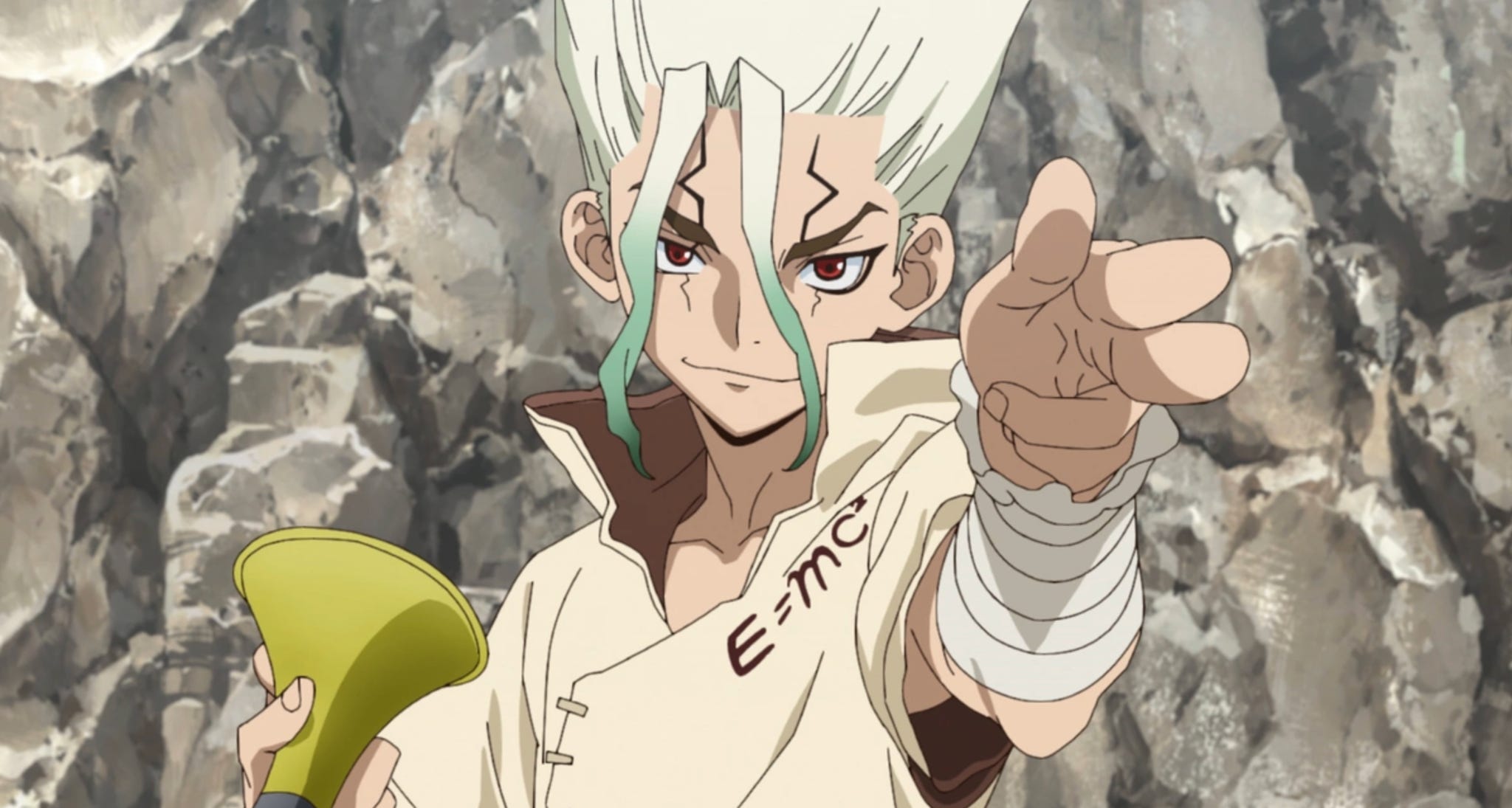
Senku, our main character, awakens in a petrified, primitive wasteland and must use his superhuman intellect to revive humanity and rebuild civilization.
From turning stone into iron and mapping out chemical reactions, to re-inventing cell phones (the Senku Phone) and leading the Kingdom of Science—Senku finds his ultimate joy in bringing order to the world. His journey demonstrates how deeply the urge to build, structure, and innovate is woven into the human spirit.
Yet, Senku relies entirely on limited human intellect and willpower. As Christians, we have an even greater power. We are able to rely on the all-powerful Holy Spirit. We don’t have to bring order to prove our self-sufficiency; by God’s grace, we bring peace to serve others and point them to the One True Lord.
Zechariah 4:6 - Then he said to me, “This is the word of the Lord to Zerubbabel: Not by might, nor by power, but by my Spirit, says the Lord of hosts.
TRUE RESTORATION IN CHRIST
When you look at the Gospels, Jesus did not come simply to bring organizational efficiency—He came to break the power of sin and restore a broken creation back to God. Every miracle was a sign of the Kingdom breaking in:
Healing broken bodies: Disease, decay, and disability are physical manifestations of a world broken by sin—disorder taking root in human flesh (Matthew 8:16).
Clearing confusion: The religious and cultural landscape of His day was a maze of hypocrisy, anxiety, and political trap-setting. He replaced spiritual chaos with profound clarity (Matthew 22:15-22).
Calming raging storms: When Jesus spoke to the storm, He was imposing His authority over unbridled chaos. He forced a system completely out of control to snap back into absolute, immediate order (Mark 4:39).
Still, His ultimate victory over chaos occurred at the Cross, where He bore the weight of human sin to reconcile all creation to God.
DEVOTIONAL
1. Restoring the Soul to Godly Order
The inner chaos of the heart and mind must be brought into alignment with Christ.

1 Corinthians 14:33 — For God is not a God of confusion (akatastasia) but of peace...
Greek Toolkit: Being caught in akatastasia (ah-kat-ah-stas-EE-ah) means spinning in a state of utter confusion, emotional instability, and tumult. It represents the internal disorder that takes over when a man’s mind is unanchored in Christ.
The Senku Connection: In Dr. Stone, Senku often encounters villagers ruled by fear, superstition, and tradition. His response to this chaos is always the same: he refuses to let panic, myths, or curses dictate reality, anchoring himself instead in logical facts and physical laws. (Ishigami Village, Season 1.)
The Takeaway:
Human logic can quiet immediate panic, but it cannot heal a soul. When your inner life feels overwhelming and chaotic, remember that you have someone greater than science. We have the One who quieted the waves—an ultimate power that cuts through our akatastasia and offers a peace that surpasses understanding.
2. Restoring Relationships to Godly Order
Godly order in relationships isn’t about rigid control—it is about boundaries, truth, and mutual love that allow a community to thrive.

Ephesians 4:15-16 – Rather, speaking the truth in love, we are to grow up in every way into him who is the head, into Christ, from whom the whole body, joined and held together by every joint (haphe) with which it is equipped, when each part is working properly (energeia), makes the body grow so that it builds itself up in love.
Greek Toolkit:
Operating with energeia (en-erg-i-ah) means active, operative energy or “power in action”. In Paul’s letters, it describes the effective, dynamic power supplied by God that moves a believer or a community forward, causing real spiritual growth.
And the word for “joint” here is haphe (ha-FAY)—the connective tissue, bands, and ligaments that physically link the body together.
The Senku Connection: Senku knows that even the most brilliant machinery will collapse into spare parts if its joints and fasteners aren’t locked into place. For him, these ordered and carefully labelled pieces aren’t a restriction. They are the very framework required to help his inventions function properly.
The Takeaway:
Divine order isn’t the enemy of life; it’s the foundation. When we stop viewing biblical boundaries and commitments as constraints and start applying them as real haphe, our relationships may stop breaking down and start building each other up. Allow God’s energeia to strengthen you as you bring intention, standards, and clear commitment to your local church and community.
3. Restoring the World to Divine Order
God calls us to participate in His work, turning raw potential into solutions that serve people and honor Him.

Genesis 1:2 — The earth was without form (tohu) and void (bohu), and darkness was over the face of the deep. And the Spirit of God was hovering over the face of the waters.
Hebrew Toolkit: Operating with Tohu (to-hoo) wa-Bohu (bo-hoo) means confronting a state of formlessness, wasteland chaos, and utter emptiness. It describes a situation completely devoid of structure or productive function.
The Senku Connection: In the opening arcs of Dr. Stone, Senku looks out over a primitive world that is entirely tohu wa-bohu—untamed, wild, and devoid of human infrastructure. But instead of accepting the chaos, he starts charting coordinates, purifying materials, and laying down the foundational framework to systematically conquer the void.
The Takeaway:
The Creation Mandate calls us to steward the earth as God’s image-bearers. When you step into messy workspaces, broken systems, or neglected projects to bring thoughtful structure and Godly values, you are reflecting God’s heart for His creation.
WAKE UP CALL
Surrendering disorder and brokenness to God doesn’t replace having a strategy. I’d argue, it’s the very energy that powers it.
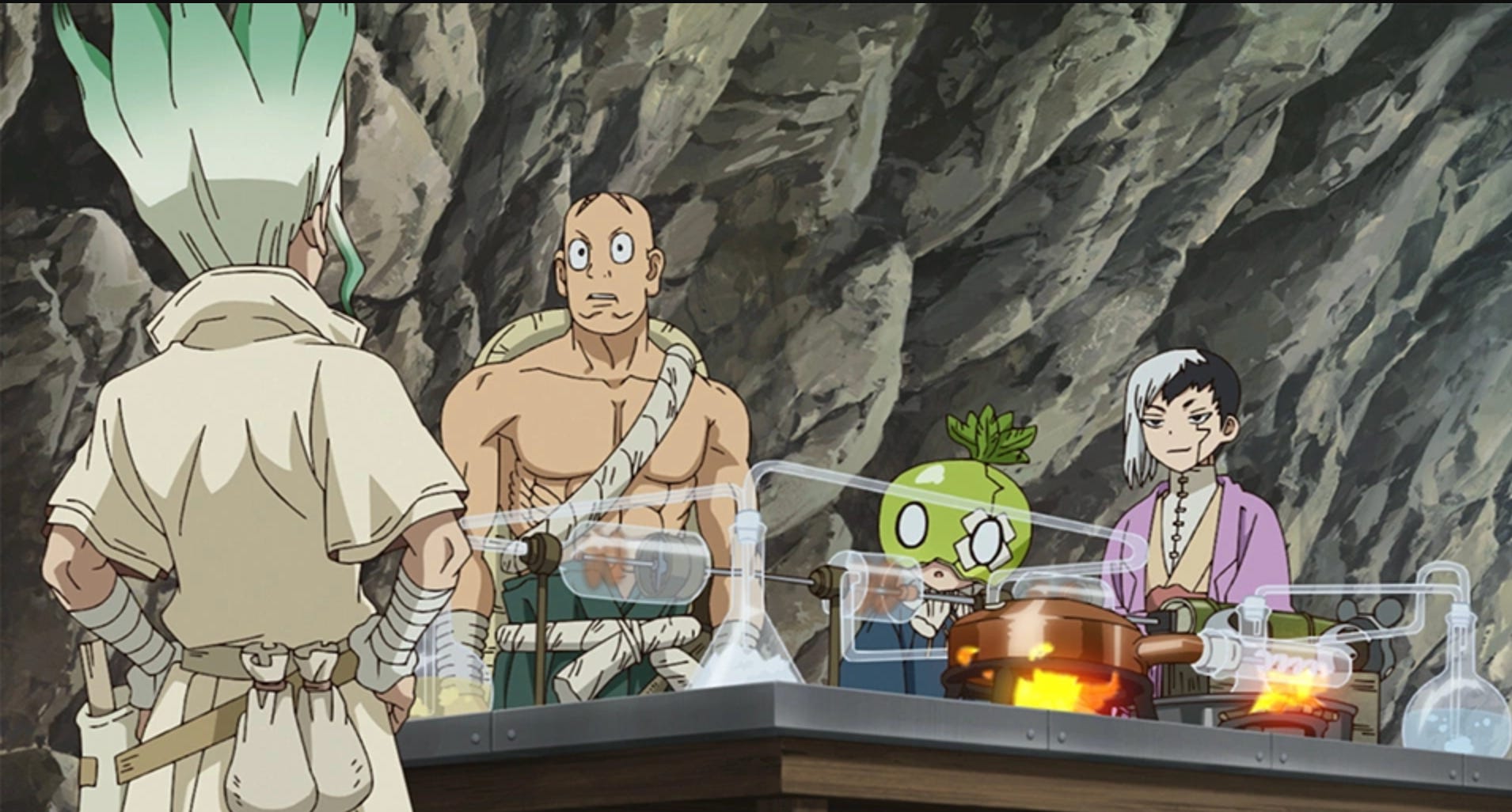
Internal chaos and anxiety consume mental bandwidth. But when God’s peace (shalom) quiets that noise, your mind clears. You gain the bandwidth to innovate, take faith-driven risks, and consult with the God who ordered the universe.
That kind of peace doesn’t come from a religious pressure to perform; it comes from knowing the final outcome doesn’t depend on just you.
Philippians 1:6 — And I am sure of this, that he who began a good work in you will bring it to completion at the day of Jesus Christ.
God is the one who finishes what He starts. When you realize His grace covers your missteps and His approval is already yours, the striving stops. And you can start functioning as the image-bearer you were always made to be.
You are left with two choices:
Human Control: You plan out of fear to secure your own outcome—anxiously striving, micromanaging, and forcing results.
Divine Stewardship: You bring God’s presence into the room before you react—building with excellence while surrendering the ultimate outcome to Him.
Surrender doesn’t make you passive—it makes you dangerous.
When you aren’t terrified of failing, you’re finally free to build something incredible.
TAVERN TALK
When chaos hits your workplace, home, or relationships, do people around you experience your reaction as calming clarity or added noise?
Senku relies 100% on his own brain power to fix a broken world. In what area of your life have you been acting like Senku—relying purely on your own intellect while forgetting the Holy Spirit?
What is one specific area of chaos in your life that you need to submit to God this week?
May God Bless You and Keep You
Image via ‘Dr. STONE’ (TMS Entertainment)
Follow me on Tiktok/YouTube @kyancloudvt
APPENDIX
HEBREW
TOHU WA-BOHU – Formlessness and void: A state of chaotic emptiness, unformed wasteland, and complete structural absence.
Origin/Linguistics: Rooted in ancient Semitic terms describing a desert wilderness or a ruined, desolate place where no life or order can be sustained. It depicts raw, untamed potential that lacks any defining form.
Evolution: Expanded beyond physical geography to describe moral confusion, mental instability, and societies that have completely rejected divine governance.
Biblical Meaning & Modern Relevance: Used in Genesis 1:2 to describe the earth before God spoke light and order into existence, tohu and bohu reveal that chaos isn’t a rival monster to be feared, but raw, unformed potential waiting for divine architecture. God’s immediate response to this blank canvas was to introduce brilliant, life-giving structure. For a Christian man, this means you don’t run from the unformed, messy spaces of your life—you step into them with the Holy Spirit to bring divine order.
GREEK
AKATASTASIA – Confusion and instability: A state of tumult, social disorder, and chaotic instability.
Origin/Linguistics: Stemming from components meaning “not settled” or “thoroughly disrupted,” akatastasia describes an environment where structures have collapsed and chaos reigns unchecked.
Evolution: Used in classical Greek and Hellenistic literature to denote political riots, mental agitation, and communities fractured by factionalism and lack of leadership.
Biblical Meaning & Modern Relevance: In 1 Corinthians 14:33, Paul contrasts akatastasia directly with the nature of God, declaring that the Creator does not sponsor confusion. For young men navigating a chaotic age, adopting this mindset means rejecting mental clutter and emotional instability, anchoring your life instead in the stable, peaceful order of Christ.
TAXIS – A disciplined arrangement or fixed order: The deliberate coordination of parts into a functioning, orderly system or battle formation.
Origin/Linguistics: Rooted in the military vocabulary of the ancient world, taxis refers to soldiers standing shoulder-to-shoulder in a structured phalanx, where discipline, positioning, and obedience to command ensure survival and victory.
Evolution: Expanded from literal military troop movements into philosophical and theological frameworks describing how the universe, human societies, and the church ought to be structured under divine authority.
Biblical Meaning & Modern Relevance: God calls us to walk in taxis (1 Corinthians 14:40). Adopting taxis means rejecting sloppy habits, mastering your environment, and structuring your life around the unchanging priorities of God’s Word to build and innovate effectively.
HAPHE – The connective tissue, bands, and ligaments: The structural joining points that physically link and secure the parts of a body together.
Origin/Linguistics: Rooted in ancient Greek terminology describing physical contact, binding, or fastening, haphe denotes the structural ligaments and joints that keep a composite system from falling apart.
Evolution: Expanded from biological anatomy into medical and early Christian descriptions of how structural elements, communities, and physical frameworks are bound into a unified, functioning whole.
Biblical Meaning & Modern Relevance: Used in Ephesians 4:16 to describe the ligaments of Christ’s body, haphe reminds us that healthy relationships require intentional boundaries, commitments, and fasteners. For a Christian man, building a strong community means locking into your local church and commitments like a vital joint rather than floating as a loose, isolated part.
ENERGEIA – Active, operative energy or power in action: The dynamic, effective force supplied to produce tangible results and growth.
Origin/Linguistics: Derived from energos (active/working), energeia is the root of our modern word “energy.” In classical antiquity, it described inherent potential brought into active, powerful operation—work being successfully executed.
Evolution: Adopted heavily in Hellenistic philosophy and Pauline theology to contrast passive theory with real-world, kinetic power that shifts outcomes and drives a system forward.
Biblical Meaning & Modern Relevance: In Ephesians 4:16, Paul points to God’s energeia as the driving force behind spiritual and community growth. For a Christian man, this means you aren’t left to white-knuckle your responsibilities alone; divine power is actively at work in you, empowering you to bring intention, structure, and real innovation to the spaces God has placed you in.
