


1 Peter 5:10 – And after you have suffered a little while, the God of all grace, who has called you to his eternal glory in Christ, will himself restore, confirm, strengthen, and establish you.
Proverbs 16:9 – The heart of man plans his way, but the LORD establishes his steps.
INTRODUCTION
It’s easy to feel like you’re failing when your reality doesn’t match your ambitions. You have a vision for your life—career goals, relationships, and spiritual maturity—but you’re constantly met with roadblocks. This frustration is a trap that leads many men to cynicism, or worse, the total abandonment of their calling.
But what if the “detour” you’re currently in isn’t a mistake? What if it’s the place where God is preparing you to carry the weight of your future?
BARAKAMON
Sei Handa, the protagonist of Barakamon, starts his journey as a talented but prideful calligrapher who suffers a professional meltdown when his work is called “unoriginal.” Exiled to a rural island by his father to cool off, his rigid, perfectionist mindset is constantly wrecked by village life and the chaotic locals.

Like a loving father disciplining a son (Hebrews 12:6), Handa’s exile wasn’t meant to destroy him, but to mature him. He’s forced to learn that true mastery—and true manhood—isn’t found in a sterile studio perfecting technique for human applause, but by engaging with the raw, messy reality of life and allowing himself to be shaped by community.
REFLECTION IN CHRIST
In the same way, we often exhaust ourselves trying to earn what God freely offers by grace. Real transformation happens when we stop striving, yield our limited perspective to His sovereign hand (Proverbs 16:9), and trust His timing.
Christ doesn’t promise instant success, but a process of sanctification that builds character through humility, waiting, and at times, suffering. What a relief to know our Lord knows us, walks with us through every phase, and promises that after you have suffered a little while, He Himself will restore, confirm, strengthen, and establish you (1 Peter 5:10).
DEVOTIONAL
1. The Call to Eternal Glory
God calls us out of destructive lifestyles and into His eternal glory. Dying to self is painful, but God uses that “suffering” to strip away performance and form Christlike character.

1 Peter 5:10 — And after you have suffered a little while, the God of all grace, who has called you to his eternal glory in Christ, will himself restore, confirm, strengthen, and establish you.
Greek Toolkit: Katartizō (καταρτίζω | kah-tar-TEE-zoh): Meaning to mend, restore, equip, or render fit. Historically used for mending broken fishing nets or setting fractured bones. It’s not just fixing damage—it’s repairing a tool so it can handle a greater purpose.
The Anime Connection: Handa’s exile wasn’t a punishment; it was a divine katartizō. Burning out in Tokyo was the result of relying on his own strength and chasing human applause. The breakdown of his pride was painful, but as he stopped painting for gallery judges and began painting for the islanders, God mended what was broken in his soul.
The Takeaway:
Where are you currently experiencing the painful death of your own plans or energy? Stop white-knuckling your way out of burnout. Ask God what self-reliant part of your heart He is putting to death, and thank Him that He is equipping you for something far weightier than applause.
2. Returning to Childlike Faith
You cannot intellectualize or strategy-plan your way out of God’s process. True peace comes when you stop trying to “solve” your life and yield to the Holy Spirit with the trust of a child.

Proverbs 16:9 — The heart of man plans his way, but the LORD establishes his steps.
Hebrew Toolkit: Kûn (כּוּן | koon): Meaning to be firm, established, fixed, or prepared. While man tries to calculate every turn in his mind, it is God who physically sets the foundation under your feet so you do not stumble.
Greek Toolkit: Pistis (πίστις | PEES-tees): Deep trust, reliance, and self-surrender to God—the opposite of leaning on human intellect or self-derived wisdom. (Proverbs 3:5).
The Anime Connection: Handa arrives on the island desperate to intellectualize his art and scheme his way back to Tokyo. But the constant “interruptions” from Naru—a 7-year-old who operates purely on childlike wonder—force him to stop overthinking. By surrendering his need to control every outcome, Handa’s mind is freed from constant toil, allowing him to see the path God was already kûn (establishing) beneath his feet.
The Takeaway:
Where are you mentally exhausted from trying to figure everything out? Where can you drop the strategic control and yield to God like a child trusting his Father?
3. Restoration in Community
Once your mind is freed from self-absorbed striving, your heart is free to receive grace and your hands are free to extend it to others. God uses the messy, unrefined people around you to strengthen your spirit and give you fresh perspective.
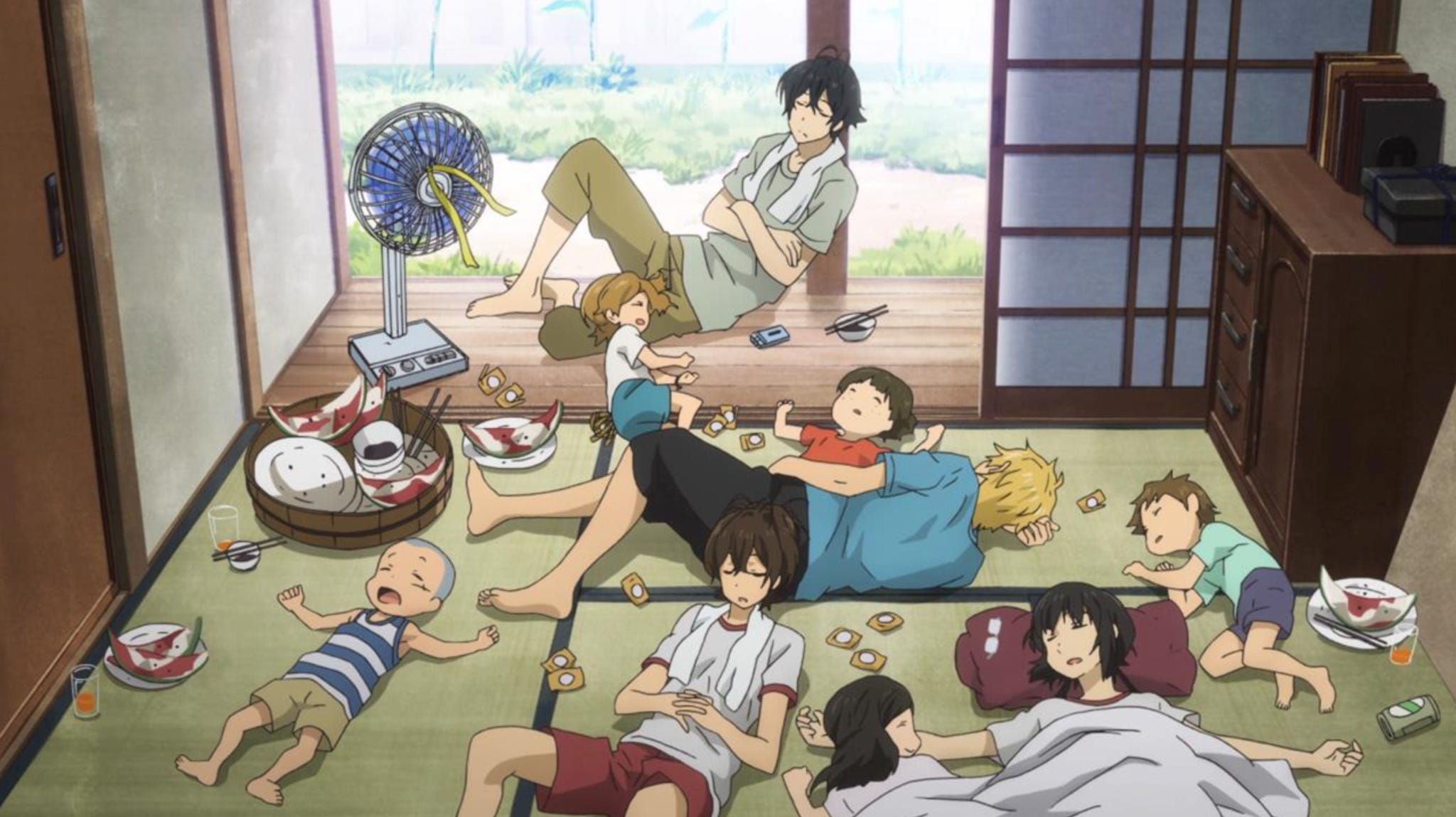
1 Peter 5:10 — And after you have suffered a little while, the God of all grace, who has called you to his eternal glory in Christ, will himself restore, confirm, strengthen, and establish you.
Greek Toolkit: Sthenoō (σθενόω | sthen-eh-OH): Derived from sthenos (moral strength, bodily vigor). To be filled with spiritual stamina and fortitude. While sthenoō is God’s direct gift of fortitude, Scripture consistently shows He imparts this strength through the body of believers as we carry one another’s burdens (Galatians 6:2, 1 Thessalonians 5:11).
The Handa Connection: In Tokyo, Handa viewed people as noise and distractions. On the island, once he yielded his pride, those same “distractions” became his salvation. Through processing life with messy, unrefined villagers, his perspective broadened. He realized his life and art weren’t meant to serve his ego, but to bless the community he was placed in.
The Takeaway:
Are you viewing the people around you as obstacles to your goals, or as the very place God is granting you fresh perspective and spiritual strength?
WAKE UP CALL
You are not wasting time just because you aren’t at the finish line yet.

Men often fall into the trap of measuring their worth by their output—how many projects they’ve finished, how much money they’ve made, or how “established” they look on social media. But God is looking at your input. He is looking at how you handle the quiet, mundane, and frustrating seasons of life.
Barakamon shows us that Handa’s greatest work didn’t come from his original, arrogant pursuit of excellence; it came after he was humbled by the island. You have a choice: you can remain bitter about your “detour,” or you can lean into the process. God isn’t keeping you from greatness; He is building the capacity in you to actually handle it once you arrive.
TAVERN TALK
When you don’t get the results you want, is your first instinct to blame external factors or seek God or look at your own character?
How does the “need to be seen” as successful currently affect the decisions you make in your private life?
What is one area of your life where you need to stop controlling and start trusting that God is establishing your steps?
May God Bless You and Keep You
Image via ‘Barakamon’ (Kinema Citrus)
Follow me on Tiktok/YouTube @kyancloudvt
GREEK & HEBREW TRANSLATIONS
Katartizo – Greek (Restore/Mend): To repair, prepare, or make fully fit for a specific purpose.
Linguistics: Used in the New Testament to describe the mending of fishing nets. It implies returning something to its original, functional state after it has been damaged or frayed by use.
Biblical Meaning & Modern Relevance: In 1 Peter 5:10, this is the first step of God’s work in us. For a young man, this is critical: your failures aren’t the end of your story. They are the moments where God mends your character so you aren’t “torn” by the pressures of the world. He makes you functional and fit for His Kingdom.
Kun – Hebrew (Establish/Firm): To stand upright, to be fixed, to be prepared or ready.
Linguistics: Rooted in the idea of being steady or grounded, like a pillar or a foundation that cannot be moved. It implies deliberate, calculated action—not haphazard movement.
Biblical Meaning & Modern Relevance: Proverbs 16:9 reminds us that while we have agency, God has authority. Modern culture tells you that you are the sole captain of your soul. This is a lie that breeds anxiety. Understanding kûn means finding the confidence that even when you don’t know the full route, the One who created the map is ordering your feet.
Sthenoo – Greek (Strengthen): To make strong, to confirm, to establish.
Linguistics: A rare word appearing only once in the New Testament (1 Peter 5:10). It refers to internal fortitude and being braced against opposition.
Biblical Meaning & Modern Relevance: Peter uses sthenoō to assure us that God’s goal in our trials isn’t to leave us broken, but to render us spiritually braced and fortified for the mission ahead. You aren’t just enduring hardship; you are being reinforced, like a ship prepared for deeper, rougher waters.