


Numbers 20:11-12 – “And Moses lifted up his hand and struck the rock with his staff twice, and water came out abundantly, and the congregation drank, and their livestock. And the Lord said to Moses and Aaron, ‘Because you did not believe in me, to uphold me as holy in the eyes of the people of Israel, therefore you shall not bring this assembly into the land that I have given them.’”
James 1:20 – “For the anger of man does not produce the righteousness of God.”
Welcome back, gents
Today's culture tells young men that true strength means being aggressive, dominating others, and letting anger run wild. It claims that blowing off steam and venting your frustrations is just being "authentic."
But biblical masculinity calls us to precise, disciplined obedience even when people provoke you. When you execute an assignment based on how you feel rather than what God commanded, you drift into rogue operations that may fracture your long-term spiritual stewardship.
My Hero Academia

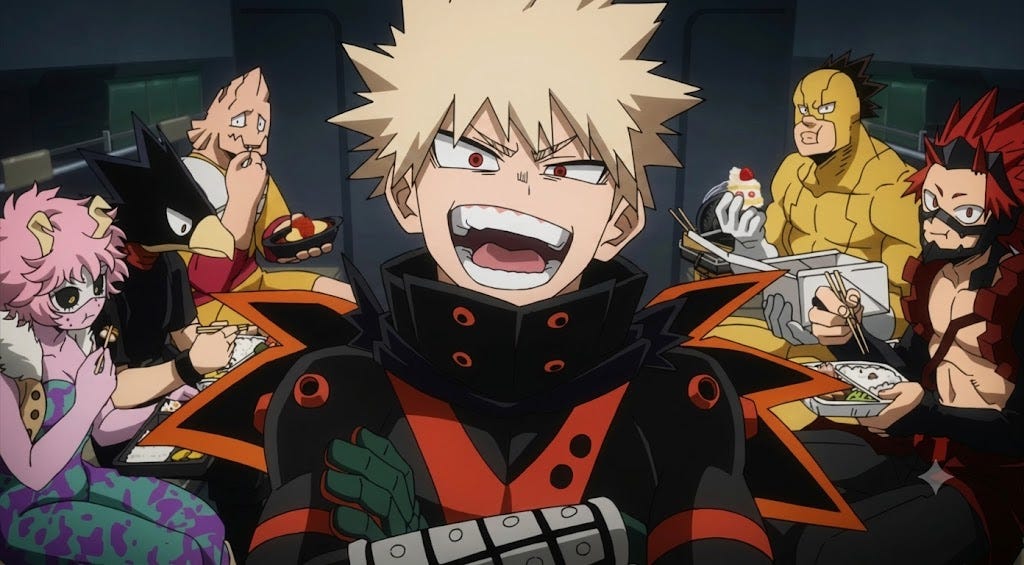
To see what this looks like in high-stakes tactical environments, look at Bakugo Katsuki during the early seasons of My Hero Academia. Bakugo possesses elite combat capacity and a powerful Quirk, yet his tactical execution is constantly sabotaged by unchecked rage. During the Battle Trial arc, his personal frustration toward Deku causes him to ignore the mission parameters entirely, launching rogue, lethal explosions that compromise his team’s objective and earn him a harsh operational review.
Scripture
Jesus Christ modeled flawless tactical submission under the most agonizing pressure imaginable. When He faced betrayal, false accusations, and the physical torment of the cross, He felt the full, crushing weight of distress, yet He never allowed emotion to hijack His deployment. Jesus experienced righteous anger against sin, but He never operated out of selfish, retaliatory rage (Matthew 26:53). Instead, Jesus locked His focus on the Father, ensuring that every prophetic requirement was perfectly fulfilled to secure our ultimate victory (John 19:30).
Exact obedience is your armor.
Mission Briefing
├── Target: Eradicating rogue, emotionally driven actions that hijack exact biblical instructions during high-stress scenarios.
├── Reference: Bakugo Katsuki from My Hero Academia.
└── Intel: Ancient Greek & Hebrew strategic toolkits unlocked.
Devotional
1. The Danger of Rogue Action
Disobeying clear directives while under pressure works against your spiritual authority. God requires precise alignment with His orders, not reactive, self-willed performances.

Numbers 20:11 — “And Moses lifted up his hand and struck the rock with his staff twice, and water came out abundantly, and the congregation drank, and their livestock.”
Hebrew Toolkit: The verb for "struck" here is nakah (נָכָה), which means to smite, wound, or execute a severe, violent physical strike. Moses took a staff meant to symbolize God's shepherd-like leadership and weaponized it out of pure personal exasperation. By executing a double nakah on the rock instead of speaking to it as commanded, Moses didn't just break protocol—he ruined the prophetic picture of God's grace and misrepresented the King's character to the people.
Insight from Anime: In Season 3, during the Provisional Hero License Exam, Bakugo encounters wounded civilians. Instead of executing the precise rescue protocols, his angry impulses surface; he aggressively barks orders at the victims, failing the sub-mission because his raw frustration overrides the required protocol.
Final Thoughts: Look at the parameters God has set for your life this week. When you alter His standards to match your emotional state, you compromise your calling.
2. Human rage disrupts righteousness
Operating out of unchecked human anger never produces God’s kingdom objectives. Rage paralyzes your judgment and disqualifies you from leading effectively.

James 1:20 — “For the anger of man does not produce the righteousness of God.”
Greek Toolkit: The word for anger here is orgē (ὀργή), signifying a settled, burning wrath or an internal emotional ignition that drives a man to violent, impulsive actions. It is an emotional mutiny against the Holy Spirit’s restraint.
Insight from Anime: During his first combat training session against Deku, Bakugo’s intense orgē takes the wheel. He stops thinking strategically, focuses purely on crushing his opponent out of spite, and ultimately loses the match because his wrath blinds him to Deku’s actual counter-strategy.
Final Thoughts: Look at the metrics of your recent arguments. When you let orgē control your tongue, you stop building brotherhood and start destroying your spiritual perimeter.
3. Submitting actions to divine standards
True strength means aligning your behavior with God’s ultimate standard of righteousness. A real warrior measures his success by divine execution, not human emotional output.

James 1:20 — “For the anger of man does not produce the righteousness of God.”
Greek Toolkit: The word for righteousness here is dikaiosynē (δικαιοσύνη), which means divine justice, right standing, or complete conformity to God’s absolute standards and straight paths. It represents the perfect order that human anger always shatters.
Insight from Anime: It isn’t until the Meta Liberation Army and War arcs that Bakugo learns to channel his intense drive through tactical restraint. By governing his temper to align with true hero standards (dikaiosynē), his combat efficiency skyrockets, allowing him to save his teammates with focus and precision.
Final Thoughts: Do not confuse a loud, reactive temper with strength. True spiritual power is keeping your composure intact so you can hear and obey the Commander’s voice.
Wake up call
When people push your buttons, do you react with the explosive, undisciplined rage of early Bakugo, or do you stand firm in the operational restraint of Christ? Moses let his frustration get the better of him, and striking that rock cost him entry into the Promised Land (Numbers 20:12).
Which path will you choose:
The Path of Rogue Wrath: Letting your immediate frustration dictate your actions, resulting in fractured stewardship and missed inheritances.
The Path of Precise Obedience: Submitting your emotional impulses to the authority of the Holy Spirit, ensuring every directive is executed flawlessly.
Tavern talk
What specific instruction from God have you been tempted to alter or compromise lately because you are frustrated with your current circumstances?
Think about your last explosive reaction at home or with your peers. What were the actual results of grinding that out in your own power?
What practical tactic will you use this week to execute structural discipline over your temper the next time your perimeter is provoked?
May God bless you and keep you
Follow @kyancloudvt on Tiktok/YouTube for new devotionals & games.
Visuals via Studio Bones / Shueisha / My Hero Academia
Appendix
Hebrew linguistics
Nakah (נָכָה) – Hebrew (to smite / strike violently): To hit, wound, or beat an object or person with physical force.
Linguistics: In ancient nomadic and military contexts, it was often used to describe striking down an enemy in battle, slaughtering livestock, or executing physical punishment.
Evolution: It evolved from a physical term for structural impact into a serious behavioral diagnostic for actions driven by reckless, unaligned human force rather than controlled stewardship.
Biblical Meaning & Modern Relevance: In Numbers 20:11, Moses used his staff to perform a double nakah on the rock out of sheer bitterness. For young men today, this is an immediate warning: using your God-given strength or tools to smash through a problem in a fit of rage—rather than speaking the words of truth God commanded—will compromise your mission.
Greek linguistics
Orgē (ὀργή) – Greek (settled anger / ignition): A deep-seated, burning wrath that builds up internally and drives impulsive behavior.
Linguistics: Derived from a root meaning to teem or swell, like fruit ripening to the point of bursting; it implies an emotional build-up that demands an explosive outlet.
Evolution: It shifted from classical Greek descriptions of natural volcanic forces into a precise New Testament ethical diagnostic tool for dangerous, unrighteous human anger.
Biblical Meaning & Modern Relevance: In James 1:20, orgē is exposed as an absolute liability that can never produce divine righteousness. When you let a burning temper dominate your interactions—whether in gaming, sports, or family conflicts—you are letting a rogue emotion hijack your agency, destroying your testimony and your spiritual focus.
Dikaiosynē (δικαιοσύνη) – Greek (righteousness / divine standard): Complete conformity to the character, law, and straight path of God.
Linguistics: Originally rooted in civil justice and legal integrity, representing an unshakeable standard of correctness that treats all parties according to absolute truth.
Evolution: It transitioned from Greek judicial concepts of societal fairness into a macro-level theological description of God’s holy alignment, order, and covenant faithfulness.
Biblical Meaning & Modern Relevance: James 1:20 declares that human anger is fundamentally incapable of building dikaiosynē. For high school and college men navigating a highly reactive culture, dikaiosynē is your true alignment target. Real strength is keeping your life perfectly calibrated to God’s standard, proving you are no longer a slave to external provocations but an unshakeable guardian of your divine assignment.
FAQs:
Striking the Rock: It is worth noting why this single act was so catastrophic. In Exodus 17, God had previously told Moses to strike a rock to get water. But in Numbers 20, God wanted to show His people a different side of His provision. By striking it in a fit of rage, Moses ruined the physical object lesson of God’s grace and misrepresented God’s character to the nation. God explicitly tells him in verse 12 that the root issue was a lack of trust and a failure to uphold His holiness before the people. In essence, he was using a tool of leadership as a weapon.
The Two Types of Anger: In Greek, a sudden, explosive fit of rage is usually thymos (θύμος) — like a match catching fire and burning out quickly. Orgē, as you noted, is the deeper, swelling, controlled anger that seeks a calculated revenge or dominance. Bakugo wasn’t just having quick temper tantrums; he carried a deep-seated, burning resentment and pride regarding Deku that dictated his choices over a long period.
